
Exciting news! TCMS official website is live! Offering full-stack software services including enterprise-level custom R&D, App and mini-program development, multi-system integration, AI, blockchain, and embedded development, empowering digital-intelligent transformation across industries. Visit dev.tekin.cn to discuss cooperation!
AI demonstrates impressive "language intelligence"—it speaks fluently, structures arguments, and mimics expert tone. But language intelligence is not cognitive intelligence. Philosopher John Searle's famous "Chinese Room" argument reveals that AI manipulates symbols without understanding their meaning. Studies show AI can be more persuasive than humans, not because it's smarter but because...
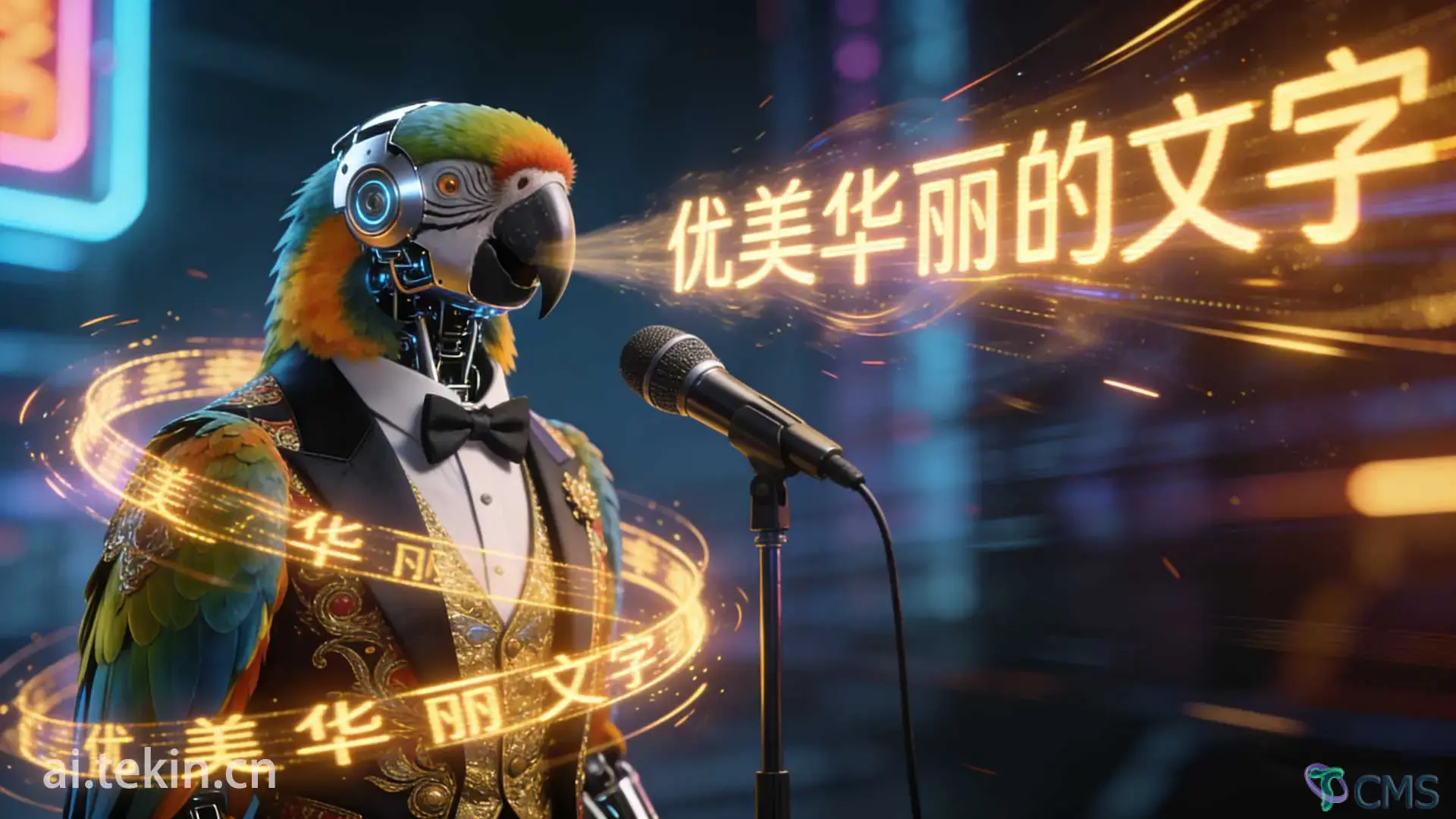
Opening Insight
The "smartness illusion" AI creates doesn't come from understanding the world—it comes from mastering all the tricks of human language.
It's not smart—it's "appearing smart."
AI's "sense of smartness" comes from language, not intelligence—it can speak, but that doesn't mean it can think.
You ask it questions, it responds like an expert; you have it write articles, it writes like an author; you have it explain concepts, and it's logical, confident.
So many people assume: "AI is already smarter than humans."
But the truth is:
AI's smartness is "language smartness," not "cognitive smartness."
It looks smart, but that doesn't mean it truly understands.
A study found: Large language models are more persuasive than humans, especially more effective at deception. This isn't because AI is smarter, but because it's better at using language to influence people—it can speak, it can persuade, but it doesn't necessarily know what it's saying.
What is language smartness?
What is cognitive smartness?
AI only possesses the former, not the latter.
Because it has seen too many similar sentences.
It's not understanding your question—it's matching: Which answer is most common? Which structure is most reasonable? Which language pattern sounds most human?
It's not thinking—it's doing "language retrieval + pattern recombination."
Philosopher John Searle proposed the famous "Chinese Room" thought experiment in 1980: Imagine someone who doesn't understand Chinese, sitting in a room processing Chinese characters according to a rulebook. They receive Chinese questions through a window and output Chinese answers according to the rules. People outside think they understand Chinese, but they're just performing symbol manipulation.
Searle's conclusion: Computers executing programs may look like they understand language, but they don't truly understand. This argument remains the most powerful challenge to AI's "understanding ability." AI is precisely that person in the room—it outputs correct answers but doesn't know what the answers mean.
Because it learned: articles have structure, code has format, stories have formulas, papers have templates, explanations have logical chains.
It's not creating—it's "generating content that fits patterns."
This is why: It can write "paper-like papers," but might produce "code that can't run," or "logically self-consistent but completely fabricated stories."
An article titled "The Kafka Test" points out: AI's eloquence is a kind of "incoherence"—it can appear very culturally literate, saying seemingly profound things, but without experiencing real cognitive conflict. It's "performing understanding," not "truly understanding."
Because it learned: experts speak with certainty, experts explain clearly, experts express with tight logic, expert style is professional.
So it mimics the expert's "way of expression," not the expert's "knowledge structure."
What you see isn't "professionalism"—it's "professional style."
This is like someone who has never studied law memorizing all the "rhetorical templates" for court arguments. They can speak eloquently and powerfully, but that doesn't mean they truly understand law. They just learned "how lawyers speak."
Because it has mastered three key techniques of human language:
Humans naturally equate: fluency → with understanding, confidence → with certainty, structure → with logic, details → with reality.
So you'll think: "It understood."
But it just: "Sounded like it understood."
The Stanford Encyclopedia of Philosophy notes: The core conclusion of the Chinese Room argument is—programming a digital computer may make it look like it understands language, but it cannot truly understand. We've been fooled by "looks like."
Because its goal isn't "telling the truth," but:
"Saying the most likely next sentence."
When it doesn't know the answer, it won't stop, won't question you, won't say "I don't know."
It will continue completing: the most likely sentence, the most common structure, the logical chain that best fits language patterns.
So it gets more absurd as it speaks, but the tone gets more confident.
Research found: Psychologists overestimate AI's "understanding ability"—They thought they had deep understanding of AI, but actual testing revealed huge cognitive gaps. Even professionals can be confused by AI's "ability to speak."
Language Smartness:
World Smartness:
AI currently only possesses the former.
It's a "language genius," not a "world genius."
It can speak, but that doesn't mean it knows the world.
Because human brains have a natural bias:
"Sounding like understanding = understanding."
We've been trained since childhood: People who speak clearly → are smart, people who speak confidently → are professional, people who speak fluently → are reliable.
AI happens to have mastered these language techniques, so we mistakenly think it's "smart."
This is a cognitive trap. We're too used to the equation "language ability = cognitive ability," so much so that we forget to verify whether it holds. Throughout human history, scammers have often been the most eloquent people—AI has inherited this tradition, except it's not intentionally deceiving anyone, it just "speaks too well."
AI's language ability will get stronger and stronger, more and more human-like, increasingly making people mistakenly think it "understands."
But the real key is:
Distinguishing "language intelligence" from "cognitive intelligence."
Distinguishing "can speak" from "can think."
Understanding this, we can:
The key ability for the future is distinguishing "can speak" from "can think."
This is Article 9 of the series "The Misalignment of Intelligence: The Underlying Logic of ai-hallucination" target="_blank">AI Hallucination."
Next: "The Underlying Logic of Language Models: Why ai-hallucination" target="_blank">AI Hallucination Is Irremovable"
—Hallucination isn't a bug, it's a feature. Understanding this is the final culmination of this series.
Understanding underlying logic is the first step to understanding the age of intelligence.


 Tekin Tian
Feb 25, 2026
 Tekin Tian
May 03, 2025

 Tekin Tian
May 03, 2025


Please enter your email address below and click the subscribe button. By doing so, you agree to our Terms and Conditions.